

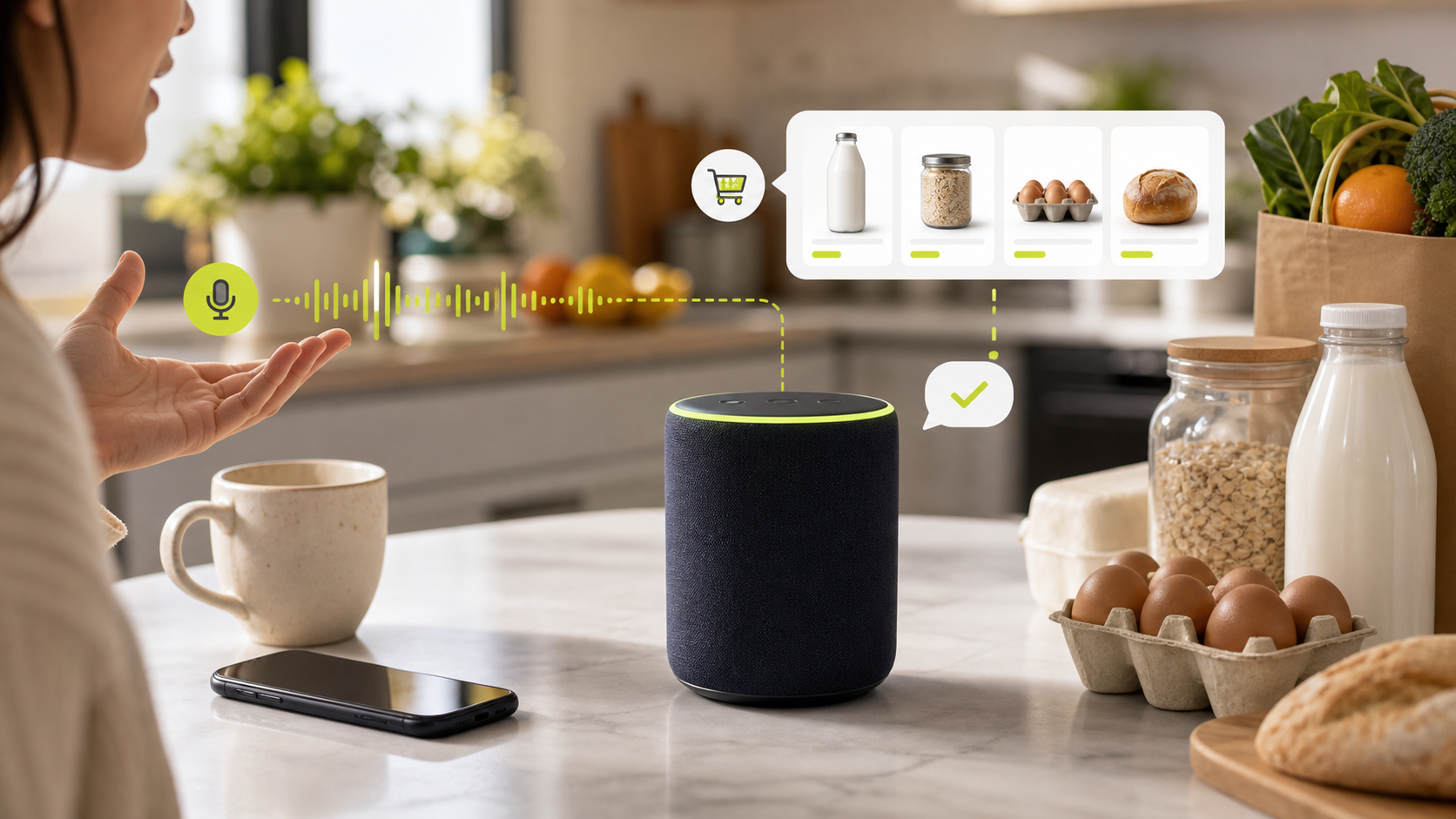
Voice search in ecommerce: the next step in user experience
Voice search in ecommerce is growing rapidly. As more shoppers use voice assistants on their smartphones and smart speakers to find and buy products, ecommerce sites that optimize for voice search gain a significant advantage. Voice queries are fundamentally different from typed searches: they are longer, more conversational, and phrased as natural language questions. “Hey Google, where can I buy organic coffee beans near me” is a very different query structure from “organic coffee beans”.
Understanding and adapting to these differences is essential for any ecommerce business looking to capture this growing segment of search traffic. A trend that EcommFinder adapts to transparently: when the user dictates a search from their mobile, the text reaches the search engine and is processed just like any written query.
How voice search in ecommerce differs from text search

Voice search in ecommerce queries average 7-10 words, compared to 2-3 words for typed searches. They frequently include question words (who, what, where, how, which) and filler words that would never appear in a typed search. They are also far more likely to express specific intent: “voice shoppers” tend to be further along the purchase funnel than casual browsers. Voice search also has higher local intent — “near me” queries are much more common in voice than in text.
For ecommerce with physical locations or local delivery options, voice search optimization is especially valuable.
Optimizing your ecommerce site search for voice

Natural language processing in the search engine
The foundation of voice search in ecommerce optimization is a search engine with strong natural language processing capabilities. EcommFinder’s search algorithm handles conversational queries effectively, extracting intent from long phrases and ignoring filler words — delivering relevant results even
Question-based content and FAQ optimization
Voice search queries are often questions. Creating content that directly answers common questions about your products — materials, sizing, compatibility, care instructions, delivery — positions your site to appear in voice search results. Product pages and category descriptions should include natural language Q&A sections that mirror the conversational format of voice queries.
Featured snippets and structured data
Voice assistants frequently read out featured snippets from Google search results when answering voice queries. Structuring your content to win featured snippet positions — through clear, concise answers to common questions, properly formatted lists and tables, and FAQ schema markup — is one of the most effective ways to capture voice search in ecommerce traffic from external search engines.
Conversational synonym mapping
Voice queries often use more informal or descriptive language than typed queries. A customer might say “shoes you can wear in the rain” rather than “waterproof shoes”. Voice search in ecommerce optimization requires extending your synonym library to cover these conversational phrasings. EcommFinder’s search engine handles many of these cases automatically, but category-specific synonym rules significantly improve results. See our full guide on smart synonyms for ecommerce search. Voice commerce is growing fast: according to Think with Google, 27% of the global online population is using voice search on mobile. Also track your voice search performance through search analytics in ecommerce.
Frequently asked questions about voice search in ecommerce

Is voice search in ecommerce already significant enough to optimize for?
Yes. Voice search adoption is growing year-over-year, particularly among younger shoppers. Even if voice search currently represents a small percentage of your total traffic, the queries it generates are high-intent and high-conversion. Optimizing now is lower-cost than catching up later when the channel becomes more competitive.
How does EcommFinder handle voice-to-text queries from mobile?
EcommFinder’s NLP pipeline automatically detects longer, conversational queries and applies different processing: stop word removal, intent extraction, and entity recognition. This means voice-style queries (“what are the best wireless headphones for gym use under £100”) are processed to extract the core intent (wireless headphones, sport use, under £100) and matched to relevant products, rather than searching for a product with that exact phrase in the title.
Should I add voice search functionality directly to my ecommerce site?
Yes, if your customer demographics include a high proportion of mobile shoppers. Adding a microphone button to the site search box that activates voice input provides a better experience for customers on mobile devices. EcommFinder supports voice input integration natively on all modern browsers that support the Web Speech API.
How do I measure voice search performance in my ecommerce analytics?
In EcommFinder Analytics, you can filter search queries by length and conversational structure to approximate voice search traffic. Queries longer than 6 words that contain question words or conversational phrases are likely to be voice-originated. Monitoring the conversion rate and zero results rate for these long-tail queries gives you a proxy measure of voice search performance.